
Collaboration in Sensemaking
What is this course about?
IA work almost never happens alone. You're working across teams, navigating competing priorities, and trying to move structural changes forward with people who have different vocabularies, different incentives, and different ideas about what "good" looks like.
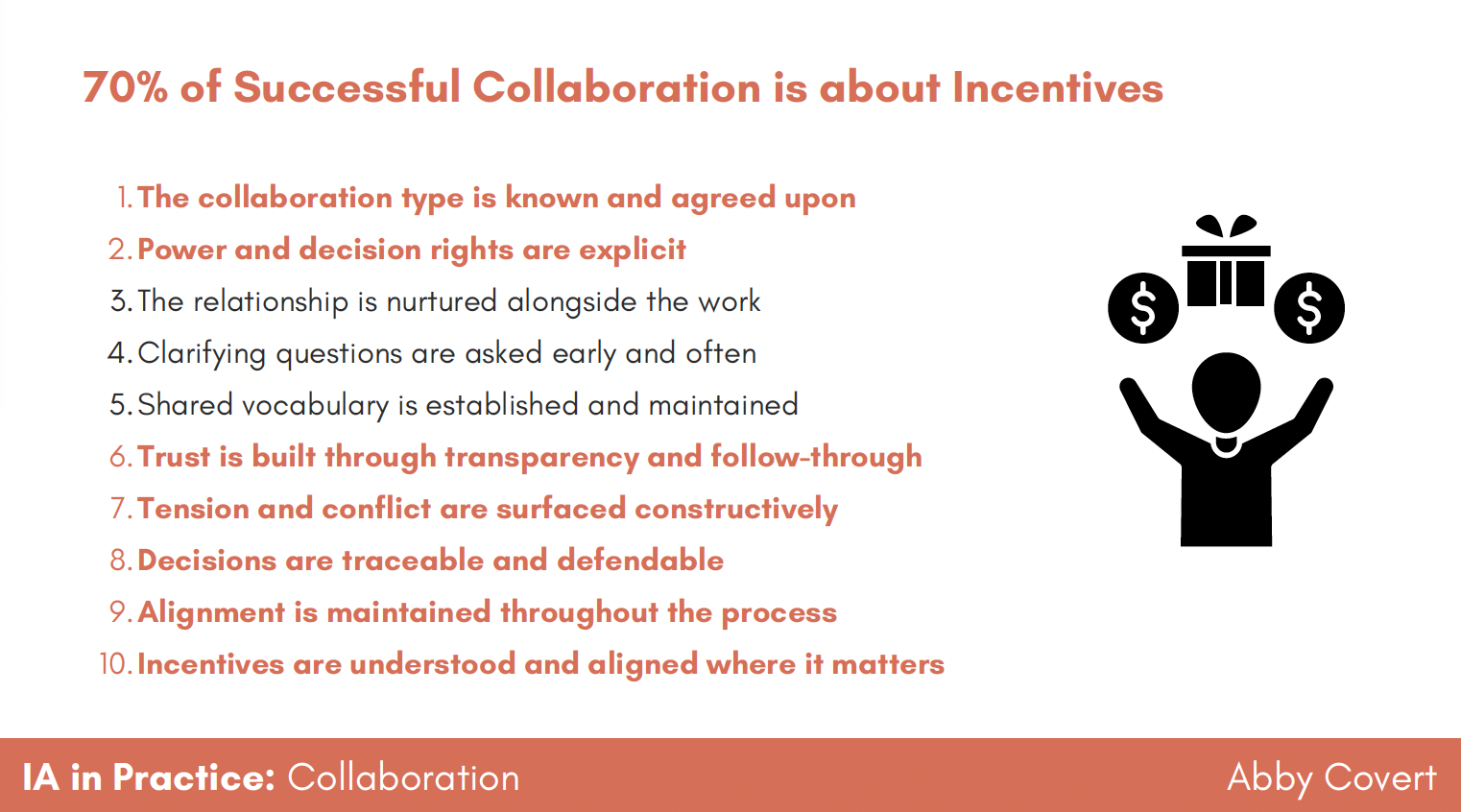
Most collaboration advice stops at "communicate better" and "align your stakeholders." This course goes deeper. It gets into the actual structure of collaboration: who has power, who has skin in the game, and what it takes to make shared decisions that stick.
If you've ever felt like you were doing everything right and still couldn't get a project to move, this course is for you.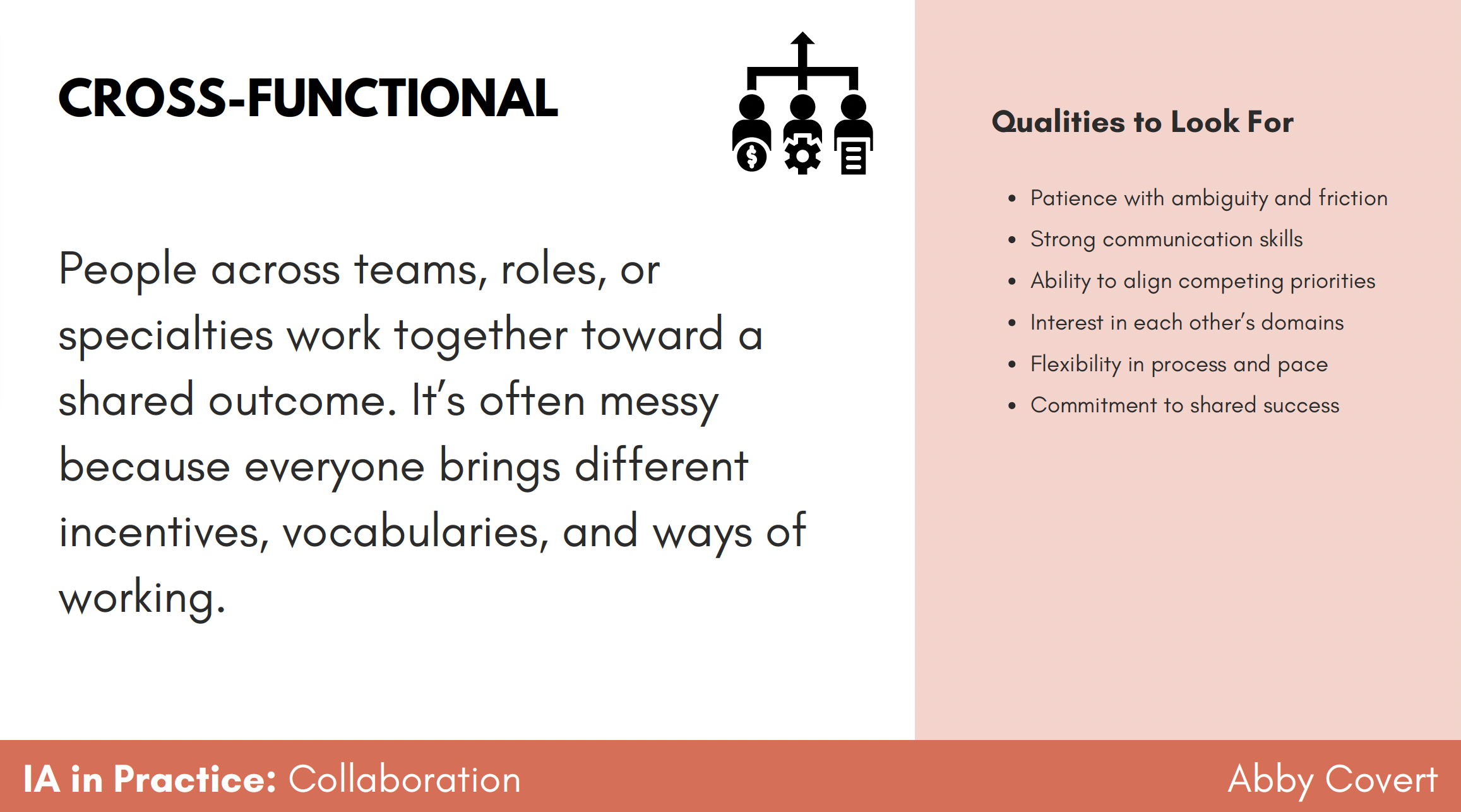 Course Example Slide 1
What is the learning objective of this course?
By the end of this course you will be able to identify the type of collaboration you're in, map the real incentives of the people you're working with, and use that understanding to get IA work done with and through other people.
You'll come away with:
- A clear framework for naming the kind of collaboration you're actually in (partnership, support, leadership, peership, consultant, or cross-functional) so you stop assuming everyone's on the same page
- The ability to uncover what's really driving the people you need to work with, not just their stated positions
- A set of go-to collaborative exercises you can run with any group to build alignment, surface tension, and move decisions forward
- A sharper eye for why collaborations fail and a practical toolkit for course-correcting before things fall apart
 Course Example Slide 2
How is this course taught?
This is a self-paced eCourse built from a live workshop recording. Here's what's included:
- Workshop recording — A recorded working session where Abby teaches the full collaboration framework and guides participants through hands-on exercises. Runtime approximately 90 minutes.
- Course deck — The complete slide deck used to teach this course, available for download.
- Collaborative exercises — Five ready-to-use exercises (Diagram Together Alone, Annotation Party, Decision Pre-Mortem, What Does Good Look Like, and Collaborative Timeline Mapping) with step-by-step instructions you can bring directly into your own work.
 Course Example Slide 3
Who was this course designed for?
- You're the person everyone calls when a project is a mess, but you don't always have the authority to fix it
- You work across teams and find yourself constantly translating between groups who aren't talking to each other
- You've been burned by a collaboration that felt aligned at the start and fell apart mid-project
- You do content strategy, UX, information architecture, knowledge management, or product design work
- You're a solo practitioner or embedded specialist who often has to build buy-in without formal authority
- You care deeply about getting decisions to stick, not just getting to a decision
- You work in complex, multi-stakeholder environments: large orgs, agencies, nonprofits, or cross-functional teams
- You want to understand why collaborations fail, not just how to make meetings feel more productive
 Course Example Slide 4
Course Outline
What Collaboration Actually Is (and Isn't)
A working definition of collaboration that cuts through the noise. Being helpful, sharing docs, and sitting in meetings don't count. This section reframes collaboration as a structure for shared power and aligned incentives, and explains why that distinction matters for IA work.
Six Types of Collaboration
A breakdown of partnership, support, leadership, peership, consultant, and cross-functional collaboration. Each type has different qualities to look for and different ways it can go sideways. You'll leave with language for the kind of collaboration you're in right now.
Incentive Management
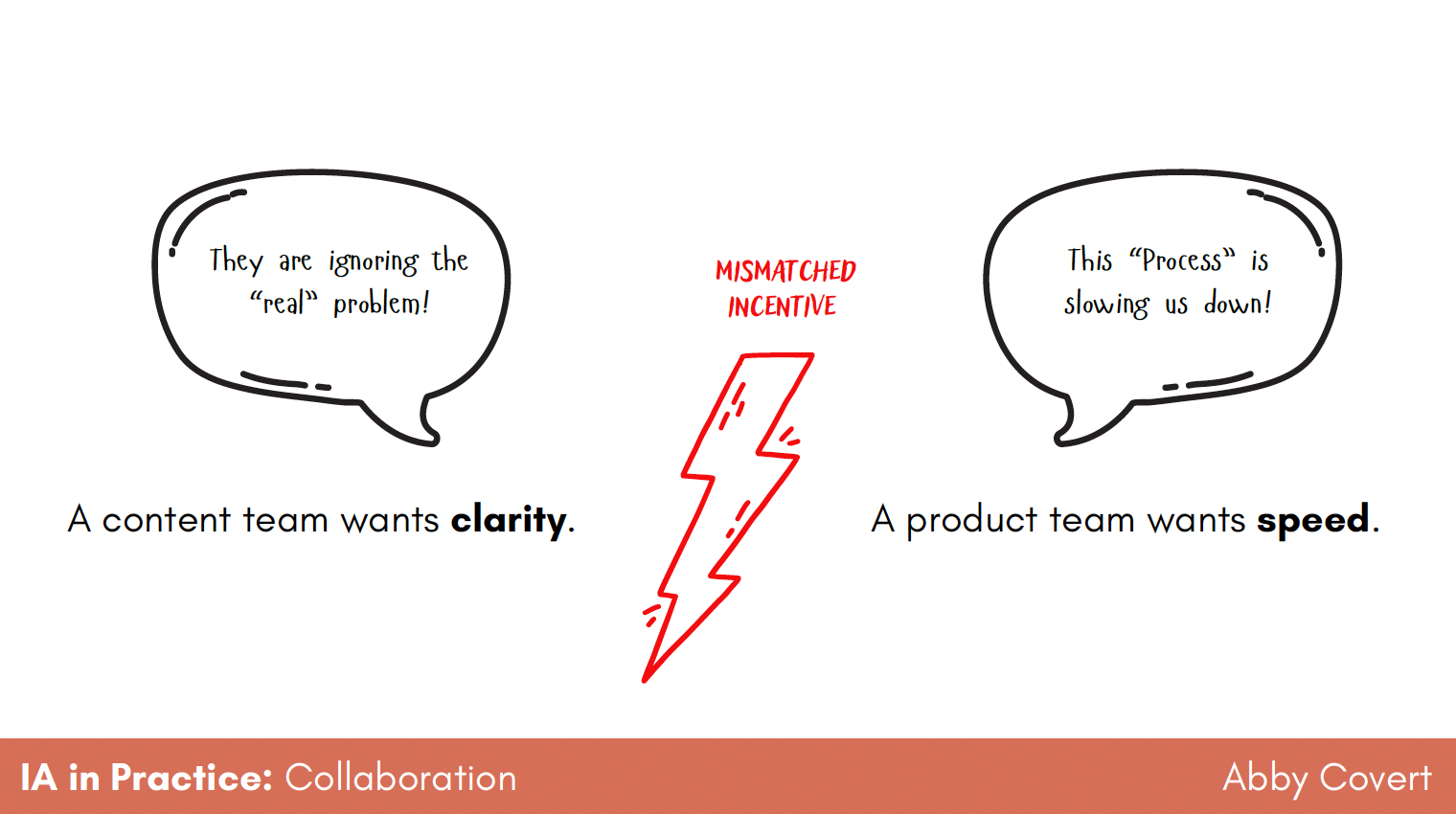
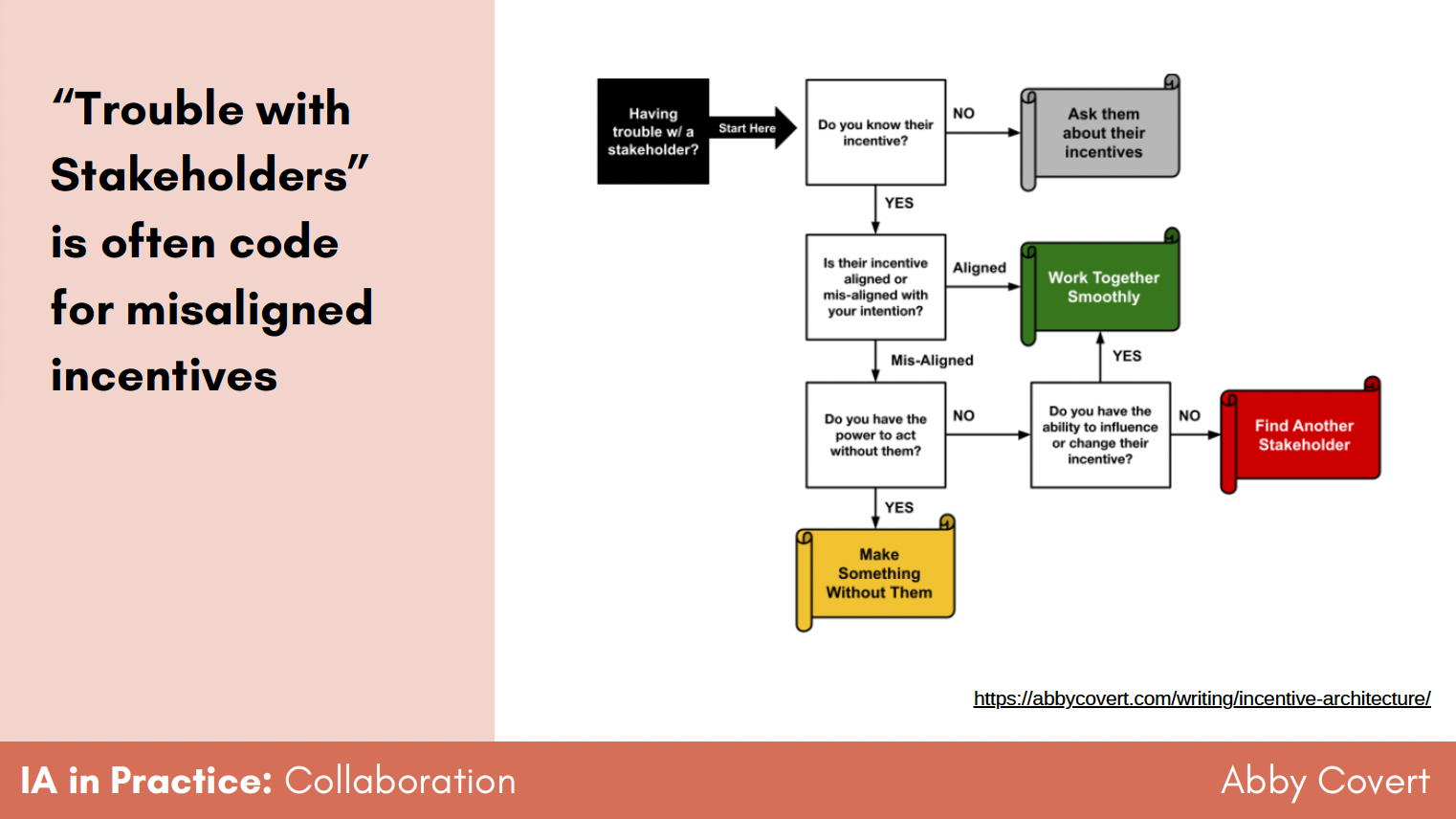
The section most people don't expect to be the most useful. This covers how to surface what's really driving the people you're working with, why misaligned incentives are usually behind "stakeholder problems," and how to use a three-part framework (outcomes, risk, and ownership) to understand what someone actually needs in order to say yes.
Go-To Collaborative Exercises
Five practical exercises Abby uses in her own work: Diagram Together Alone, Annotation Party, Decision Pre-Mortem, What Does Good Look Like, and Collaborative Timeline Mapping. Each one comes with instructions, timing guidance, and notes on when to use it.
The Collab-Fail Workshop
A hands-on practice session built around a fictional collaboration disaster. You'll work through incentive mapping, role-playing, and course-correction in a scenario designed to make the failure modes memorable, not just recognizable.

Who is guiding this course?
"Most collaboration problems aren't communication problems. They're incentive problems. Once you learn to see that, you can't unsee it." — Abby Covert
A community organizer, information architect and sensemakers with twenty years experience helping others make the unclear, clear.
