
How to Manage Stakeholders
What is this course about?
Your ideas are good. Your work is solid. But somehow, projects still stall, get re-scoped at the last minute, or die in review. The problem isn't the work. It's the people around it.
Stakeholder management is one of the most underdiscussed skills in information architecture and knowledge work. You can build the best structure in the world and still lose if you haven't brought the right people along. This course is about changing that.
Whether you're dealing with unclear priorities, disputes over what things should be called, overlapping ownership, or a leader who keeps redirecting the work mid-stream, this course gives you a practical way to understand who you're dealing with and what to do about it.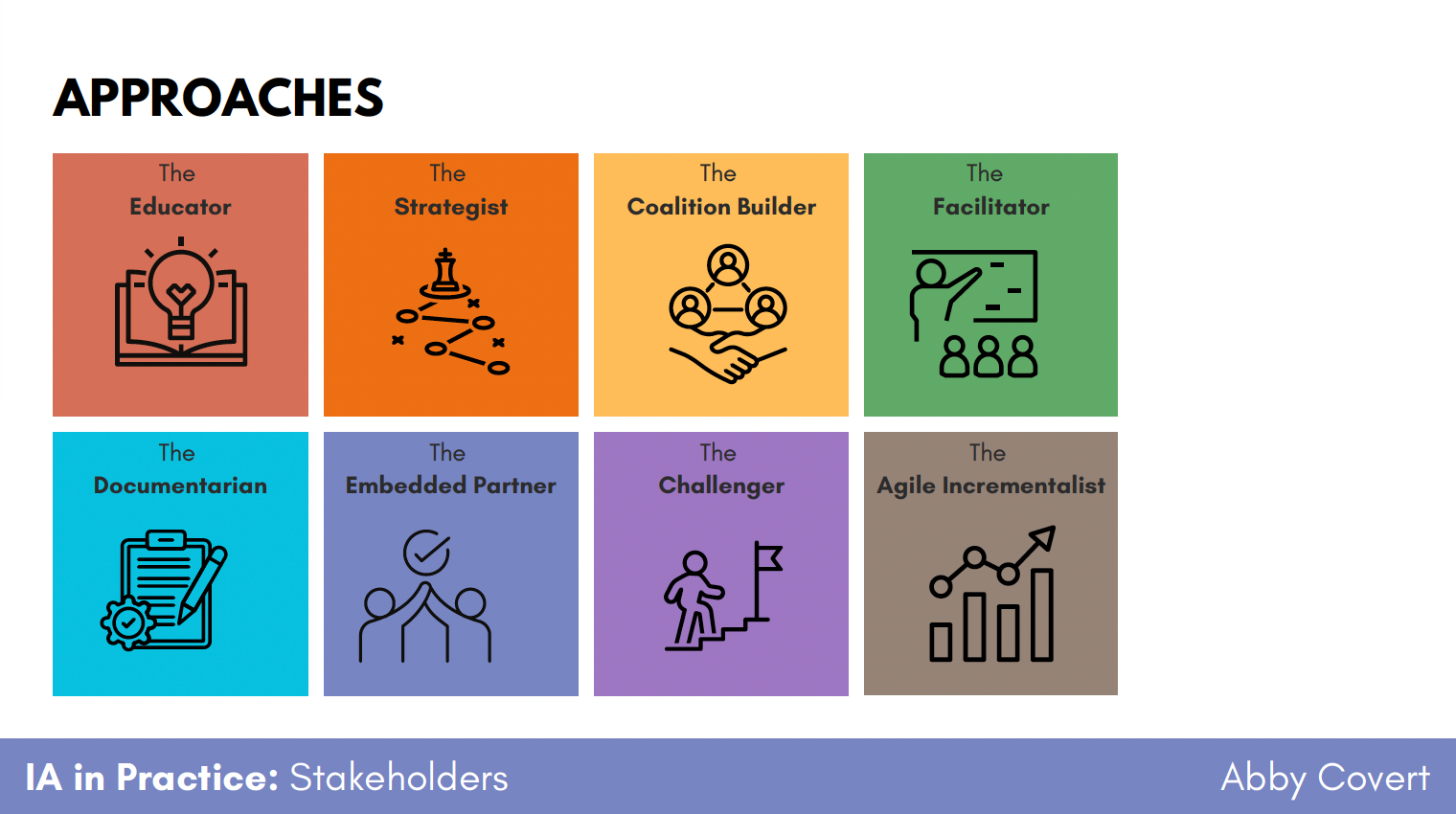 Course Example Slide 1
What is the learning objective of this course?
By the end of this course you will be able to identify your stakeholders, read the room, and choose the right approach for getting your information architecture work supported and implemented.
That means you'll be able to:
- Map the full range of people who have a stake in your project, including the ones who are easy to overlook
- Recognize the five most common stakeholder situations that derail IA work and name what's actually happening
- Choose from eight distinct stakeholder management approaches depending on context, resistance level, and organizational dynamics
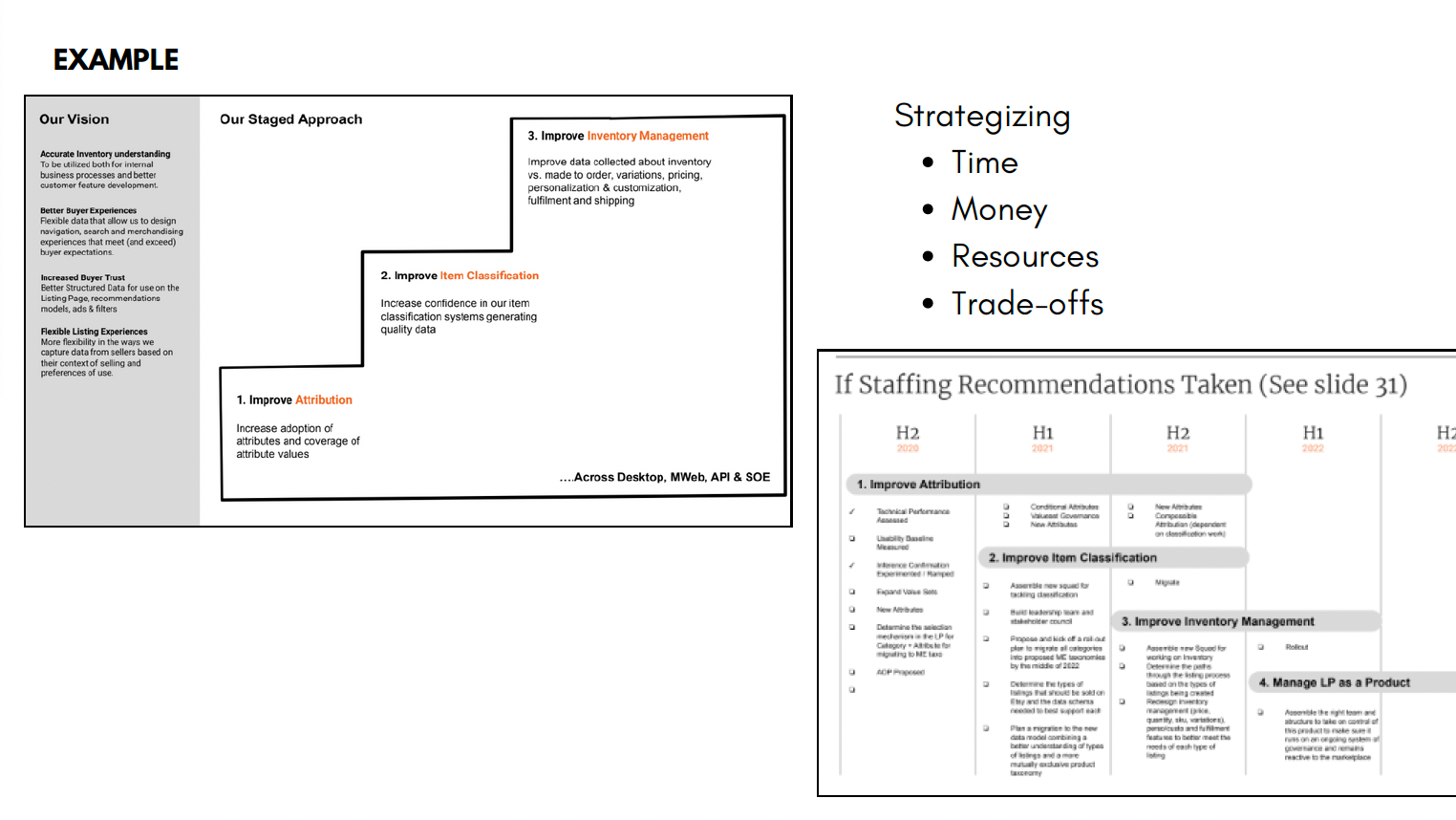
- Apply practical tactics like stakeholder mapping, scenario planning, decision logging, and minimal viable IA to real project situations
- Practice reading stakeholder behavior and adjusting your approach through case study work
 Course Example Slide 2
How is this course taught?
This is a self-paced eCourse with three components you can work through on your own schedule:
- Workshop recording: A structured, hands-on session led by Abby Covert that walks through the eight approaches with real examples and two detailed case studies you can work through yourself
- Course deck: The slides used in the workshop, available as a download for your own use
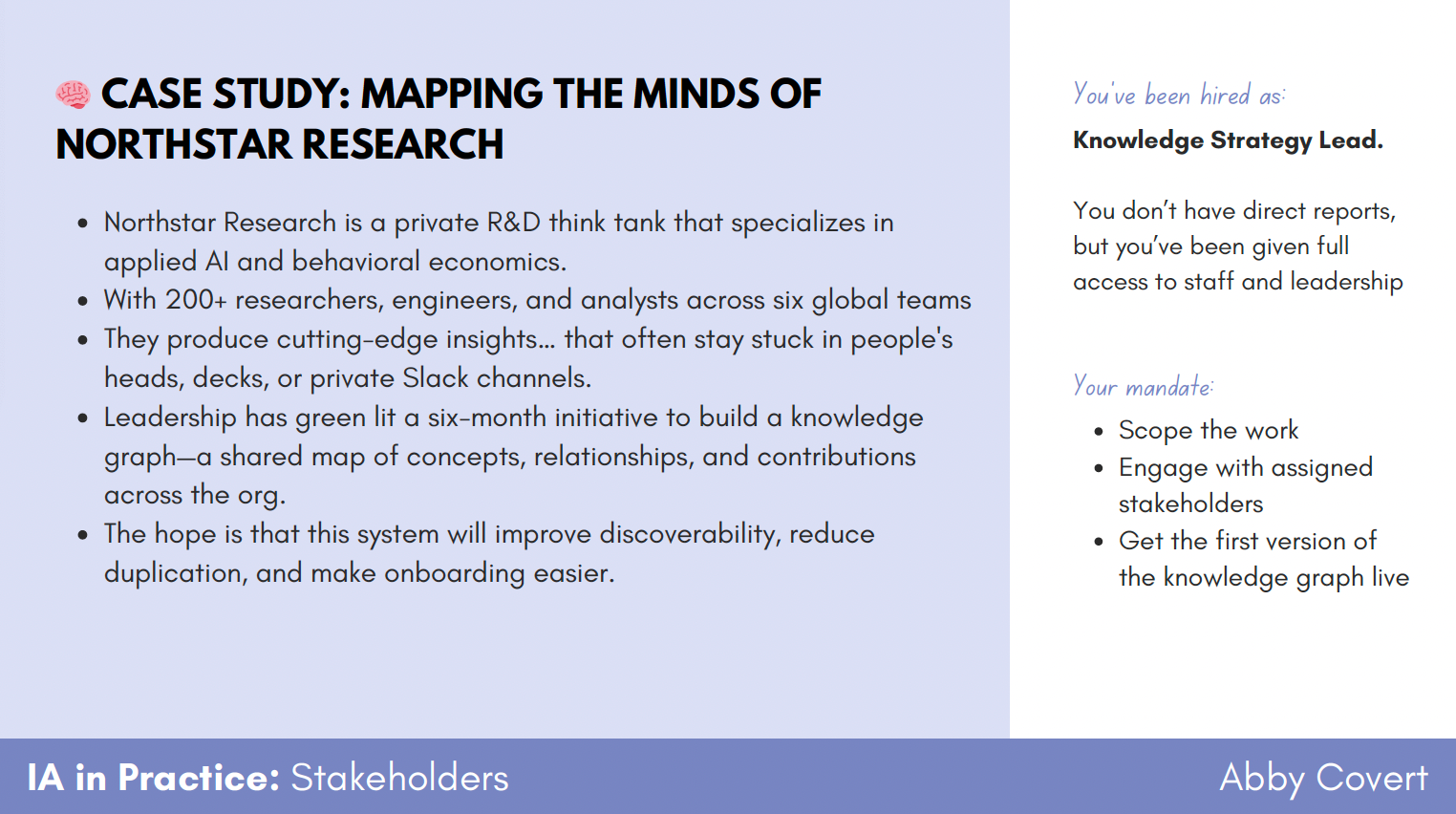
- Two case studies with discussion prompts: Work through the Northstar Research knowledge graph scenario and the Central Health intranet redesign on your own, or bring them to a peer for discussion
 Course Example Slide 3
Who was this course designed for?
- You do information architecture, knowledge management, content strategy, UX, or systems design work, whether or not those are your official job titles
- You've been put in charge of a project but don't have direct authority over the people whose cooperation you need
- You're the person who sees the structural problems that others walk right past
- You've watched a good idea get killed by organizational friction and wanted a better playbook for next time
- You work across teams and spend a lot of energy translating, re-explaining, and getting people on the same page
- You want practical approaches you can actually use, not abstract frameworks that don't survive contact with real organizations
- You might hold a title like: Information Architect, UX Designer, Content Strategist, Knowledge Manager, Product Designer, Research Lead, Systems Thinker, or Operations Lead
- You're earlier in your career and trying to understand how to work with leaders and decision-makers more effectively, OR you're experienced and looking to sharpen a skill that rarely gets named out loud
Course Outline
The Case for Stakeholder Management
Why information architecture work depends on more than the quality of the structure itself. We cover the five most common situations where stakeholder relationships make or break IA projects: unclear priorities, naming disputes, ambiguous definitions, overlapping functionality, and technical debt conversations.
Who Counts as a Stakeholder
A broader look at all the people who touch a project, from the person signing off to the person writing the support tickets. This section helps you stop underestimating who has influence and who you might be neglecting.
Eight Approaches to Stakeholder Management
The core of the course. We work through eight distinct approaches, including the Educator, the Strategist, the Coalition Builder, the Facilitator, the Documentarian, the Embedded Partner, the Challenger, and the Agile Incrementalist. Each approach comes with a description of when to use it and a practical tactic to try.
Choosing Your Approach
A decision framework for reading your situation and matching it to the right approach. Covers questions like: How much resistance is there? Who is actually involved? How well-defined is the scope? What's the history of related efforts?
Case Study Work: Northstar Research and Central Health
Two detailed scenarios where you practice applying what you've learned. In the first, you're leading a knowledge graph initiative at a private R&D think tank with a skeptical senior researcher, a stretched engineering lead, and an executive sponsor under pressure to show results. In the second, you're redesigning an intranet at a major hospital system, navigating a protective department head, a visionary but absent CIO, and an energized but time-constrained design manager.

Who is guiding this course?
"Stakeholder management is where IA work either gets implemented or dies. I've seen brilliant structures shelved because the right people weren't brought in at the right time, and I've seen imperfect structures thrive because the practitioner knew how to work with the room." — Abby Covert
A community organizer, information architect and sensemakers with twenty years experience helping others make the unclear, clear.
