
How to Measure Before Change
What is this course about?
You are about to change something. A system, a process, a tool, a structure. And you know it matters. But if you don't capture where things stand right now, you won't be able to show what changed, why it changed, or whether the change actually helped.
This course is about measurement as a sensemaking practice. Not dashboards for their own sake. Not KPIs handed down from leadership. Measurement you design yourself, for work you care about, so you can see what is actually happening and make things better.
If you have ever said "I know this work makes a difference, I just can't prove it," this course is for you.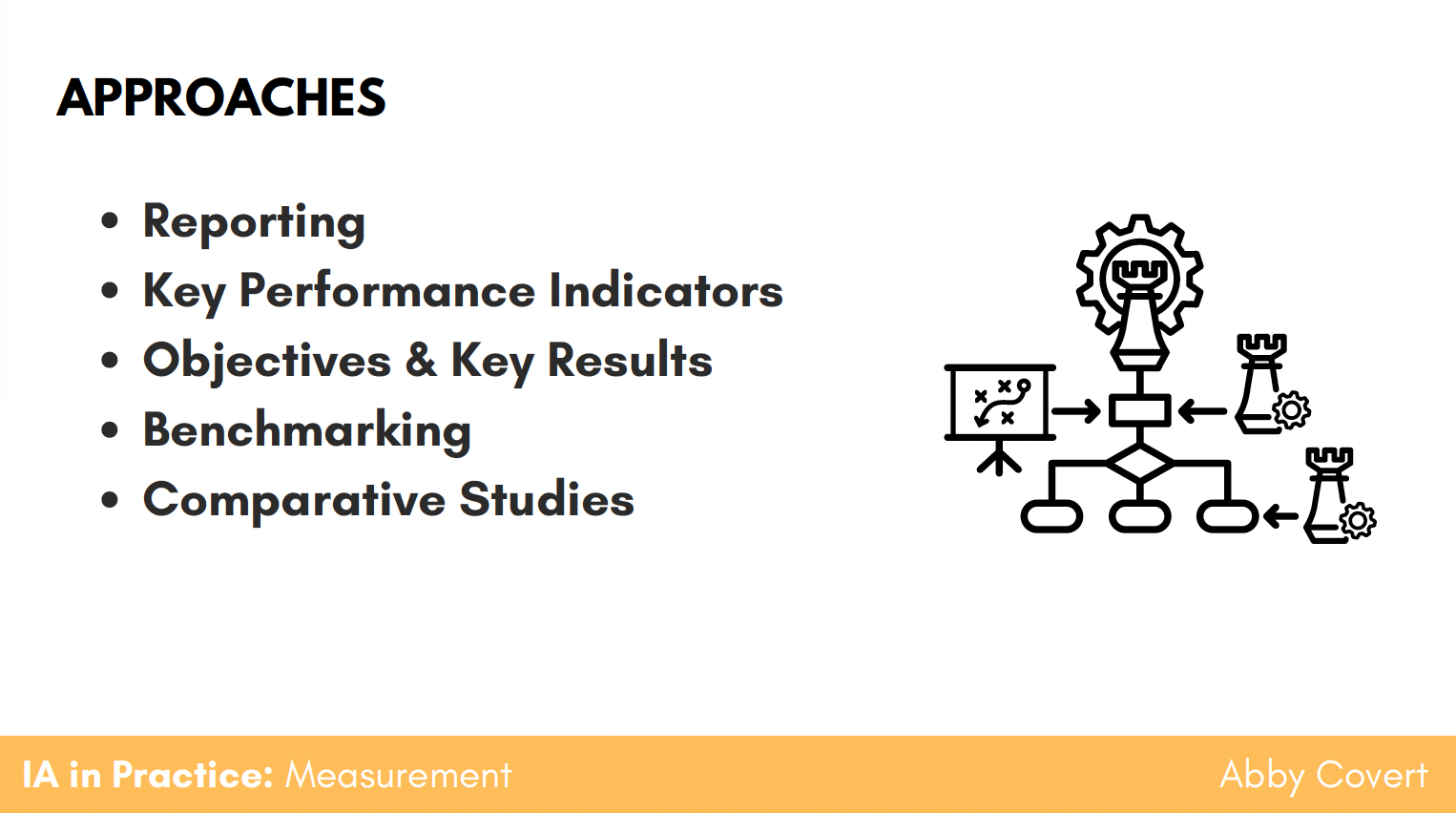 Course Example Slide 1
What is the learning objective of this course?
By the end of this course you will be able to design a simple, practical measurement plan for a change you are leading or supporting.
Along the way you will learn how to:
- Articulate a clear intention and connect it to something that actually matters to real people
- Choose between qualitative, quantitative, and mixed-method approaches based on what you are trying to learn
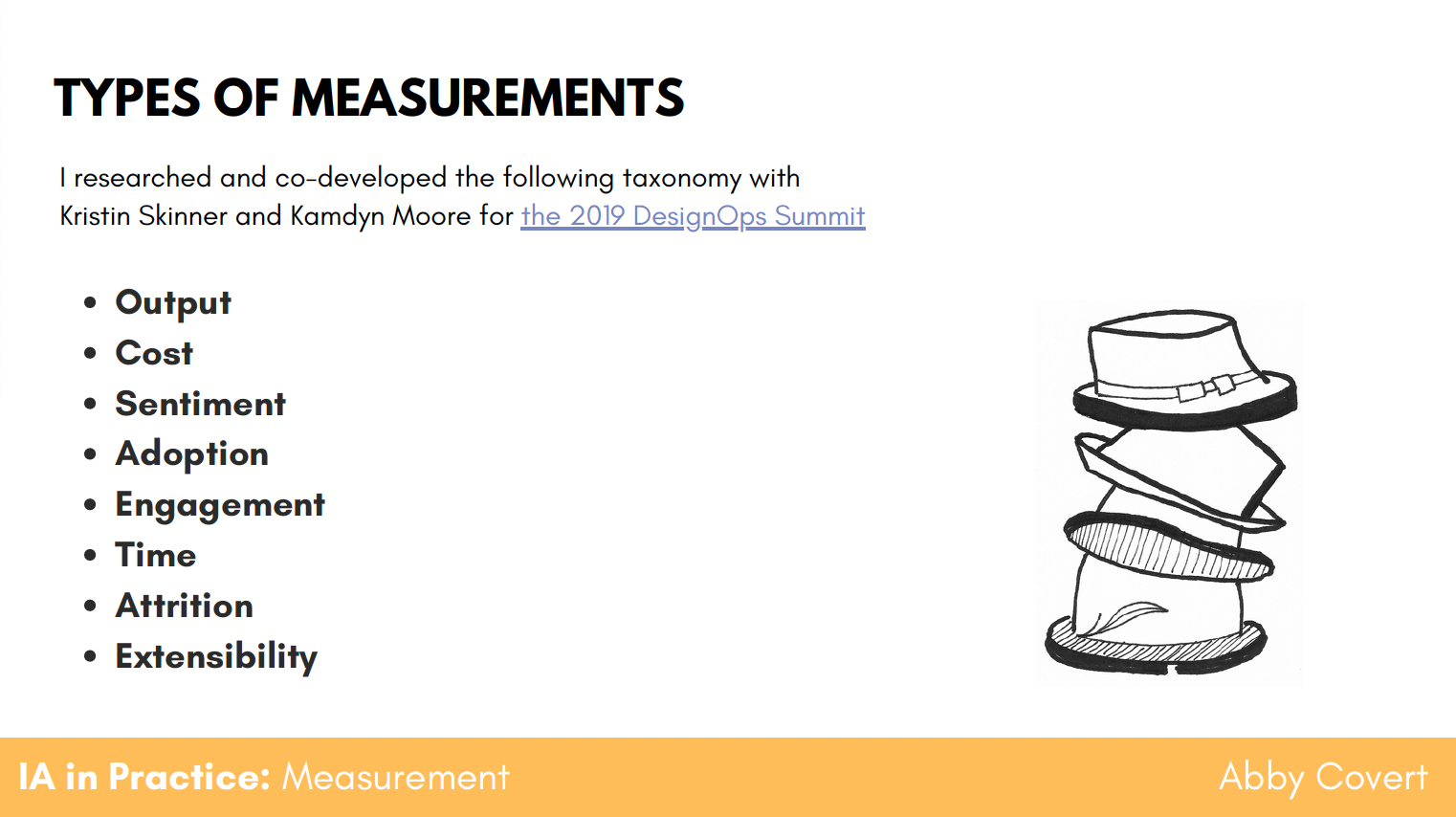
- Select the right measurement type for your situation, from output and cost to sentiment, adoption, engagement, time, attrition, and extensibility
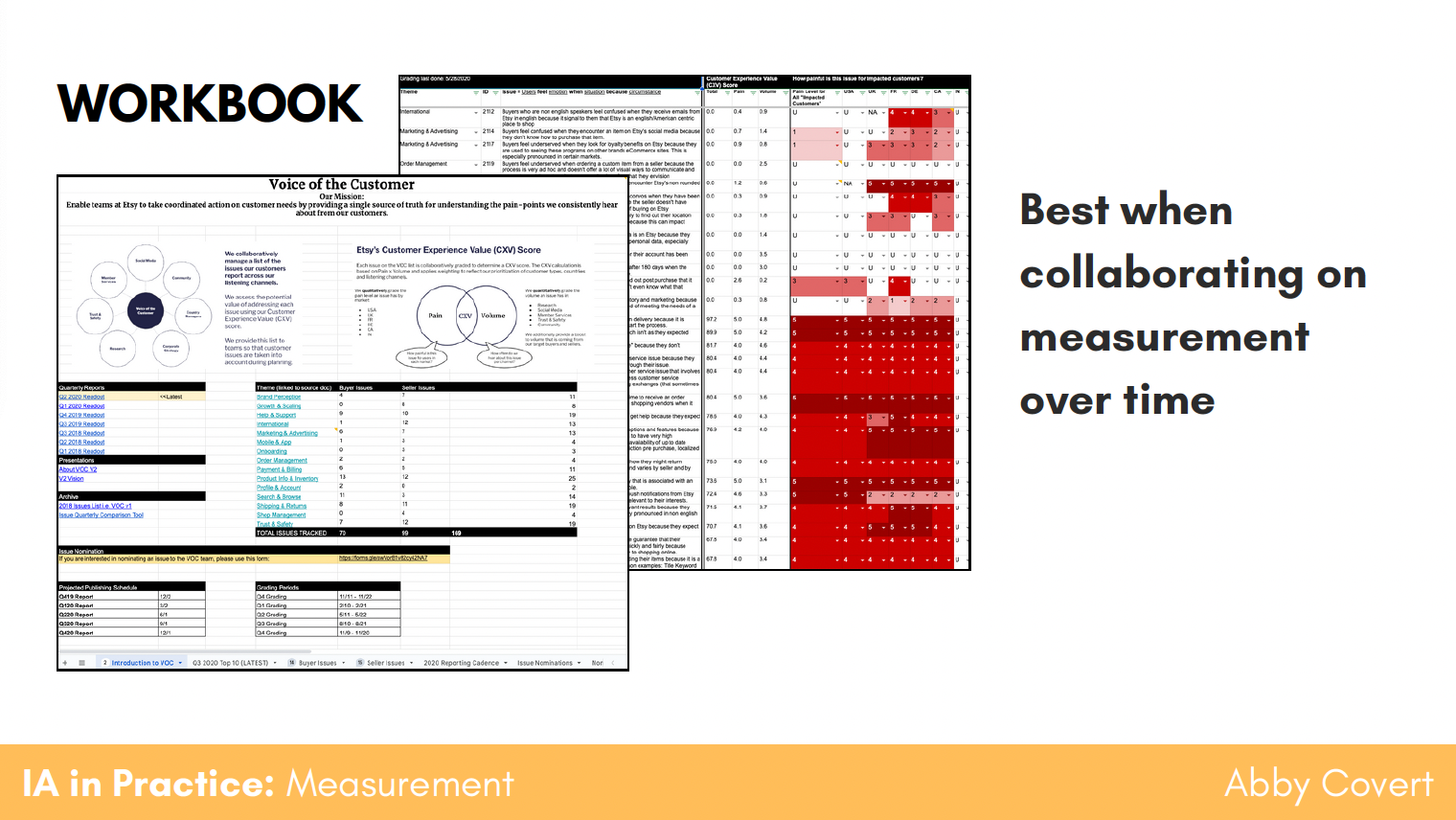
- Match your measurement format to your audience, whether that is a spreadsheet, workbook, report, or live dashboard
- Set a baseline before change begins so you have something real to compare against
- Build a warning system so you know when to adjust course, not just whether you hit a target
 Course Example Slide 2
How is this course taught?
This is a self-paced eCourse built from a live workshop recording. Here's what's included:
- Workshop recording -- A hands-on session led by Abby Covert walking through the full five-step measurement planning process, including live examples and a guided practice exercise. Estimated run time: approximately 90 minutes.
- Measurement Plan template -- A downloadable worksheet to build your own measurement plan, including fields for your intention, measurable question, two metrics with baselines and goals, and a flag and response system.
- Presentation deck -- The slides used to teach this course, available for your own reference and use.
 Course Example Slide 3
Who was this course designed for?
- You are the person on your team who notices when something is not working before anyone else does
- You do work that is hard to quantify but you know it matters, and you are tired of not being able to show it
- You are planning a systems change, a process improvement, a knowledge management initiative, a training rollout, or a cross-team effort and you want to set yourself up to learn from it
- You work in information, content, knowledge, design, research, operations, or a role that sits at the intersection of people and process
- You have titles like content strategist, information architect, UX researcher, knowledge manager, operations lead, program manager, instructional designer, or systems thinker
- You have been asked to "show the value" of your work and you are not sure where to start
- You care about rigor, not just intuition, but you also do not want to build a measurement apparatus that takes longer than the work itself
- You are comfortable with the idea of starting small and building from a real baseline rather than waiting until you have a perfect system
Course Outline
Why Measurement Matters
A grounded look at the five reasons we measure: to know where we are starting, to spot what is actually changing, to show our work matters, to know when to adjust course, and to build trust with other people.
Methods and Types
An overview of qualitative, quantitative, and mixed-method approaches, followed by a detailed look at eight measurement types: output, cost, sentiment, adoption, engagement, time, attrition, and extensibility. Each type is defined and illustrated with concrete examples.
Approaches and Formats
A practical breakdown of five measurement approaches, from basic reporting to OKRs and A/B testing, paired with guidance on when to use a spreadsheet, workbook, report, or dashboard depending on your data and your audience.
The Five-Step Measurement Planning Process
Step by step: how to write a specific, time-bound intention; connect it to a human reason that matters; form a measurable question; set up a metric with a baseline and a goal; and build a warning system so you know when to act.
Workshop: Build Your Measurement Plan
A guided practice session where you work through the full process using a provided template, applied to something real in your own work.

Who is guiding this course?
"If you don't measure where you are starting, you can't know what actually changed. This course gives you the tools to make that first step simple enough to actually do." -- Abby Covert
A community organizer, information architect and sensemakers with twenty years experience helping others make the unclear, clear.
