
Controlled Vocabularies
What is this course about?
When different people use different words for the same thing, systems break down. Search fails. Content gets tagged wrong. Teams argue about labels. New people can't find anything. And the person who built the system becomes the only one who can explain it.
Controlled vocabularies are how you fix that. A controlled vocabulary is an agreed-upon set of terms for a domain or system that everyone can use, find, and trust. This course covers what they are, how to build them, and how to actually get people to use them.
This is practical work. If you've ever maintained a taxonomy, struggled with inconsistent tagging, tried to get two teams to agree on what a thing is called, or inherited a content system full of conflicting labels, this course was built with you in mind.
What is the learning objective of this course?
By the end of this course you will be able to choose the right type of controlled vocabulary for a given situation, build one from scratch using a repeatable approach, and make a plan for getting people to actually use it.
Specifically, you'll be able to:
- Tell the difference between simple lists, synonym rings, taxonomies, thesauri, and ontologies, and know when to use each
- Choose a building approach (top-down, bottom-up, hybrid, collaborative, or borrowed) based on your situation
- Write clear, useful definitions that hold up under scrutiny
- Use a structured template to document terms, synonyms, ownership, and change history
- Identify what makes controlled vocabularies fail after they're built, and how to plan for that from the start
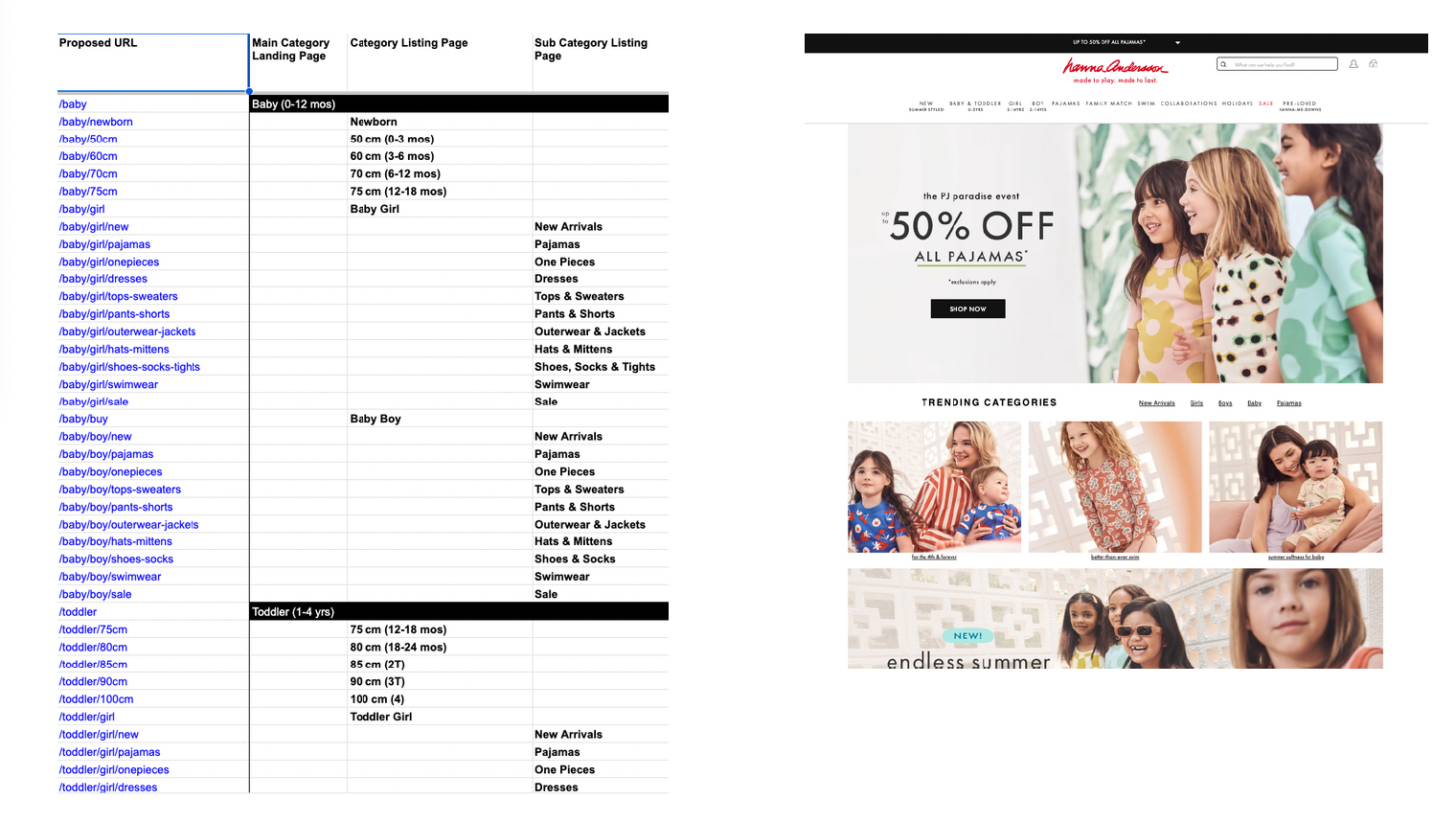 Course Example Slide 1
How is this course taught?
This is a self-paced eCourse built from a live workshop recording. Here's what's included:
- Workshop recording — A full recorded session led by Abby Covert walking through the course content, including worked examples and a live exercise where participants dissect a definition together
- Slide deck used in the live workshop, available for reference and reuse
- Downloadable template — Abby's own controlled vocabulary template, ready to use in your own projects
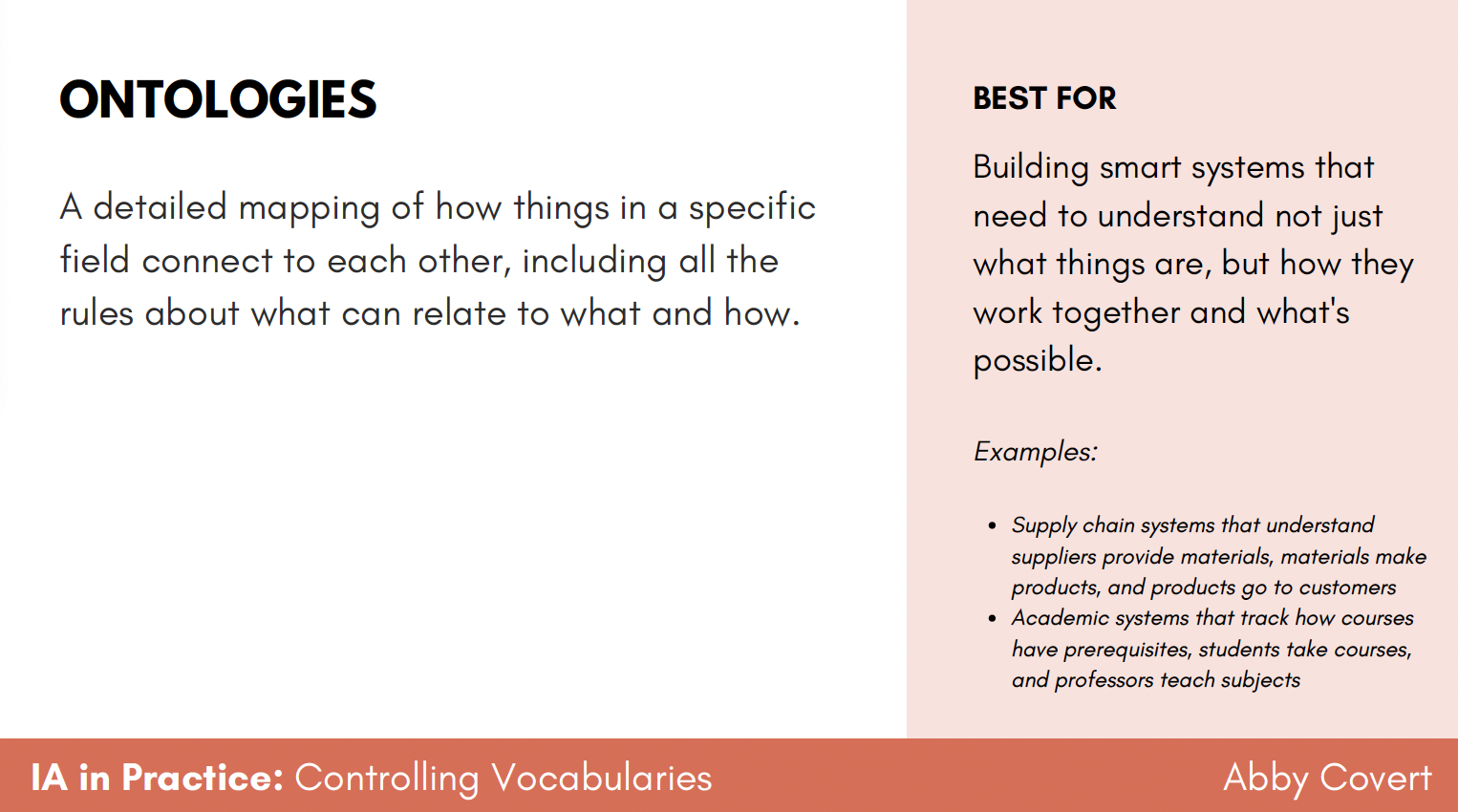 Course Example Slide 2
Who was this course designed for?
This course is for people who work with information systems and feel the pain when language gets out of control. You might be a good fit if:
- You're responsible for a navigation system, content tagging structure, knowledge base, or product catalog that's gotten messy over time
- You work in information architecture, content strategy, UX, knowledge management, or data governance
- You've been quietly building taxonomies, glossaries, or naming standards for years without a formal framework to hang them on
- You're the person your team turns to when two departments can't agree on what something should be called
- You've tried to document terminology before but couldn't get people to use what you built
- You want to move past "here's a list of words" and into something more durable and defensible
Course Outline
Community Stories
Listen in as real sensemakers share the moments when mismatched language actually cost them something. Lost time, broken search, frustrated stakeholders, and inherited messes that took months to untangle. These stories make the abstract concrete fast.
Types of Controlled Vocabularies
A clear breakdown of the five main types: simple lists, synonym rings, taxonomies, thesauri, and ontologies. You'll learn what each one is, what it's best suited for, and how to recognize which one your situation actually calls for.
Building Approaches
Five ways to build a controlled vocabulary, from the top down to the bottom up, and every practical variation in between. Each approach fits different constraints, team dynamics, and starting conditions.
Lessons Learned
The part most courses skip. Writing the vocabulary is about 20% of the work. Getting people to use it is the other 80%. This section covers what gets in the way and what actually helps.
Dissect the Definition
The final exercise puts the concepts to work. You'll watch participants work through the process of taking a single term, writing a definition, and discovering every word inside that definition that also needs to be defined. It's harder and more useful than it sounds.

Who is guiding this course?
"Most teams don't struggle to write words down. They struggle to agree on them, document them well, and keep them alive. This course is about all three." - Abby Covert
A community organizer, information architect and sensemakers with twenty years experience helping others make the unclear, clear.
